
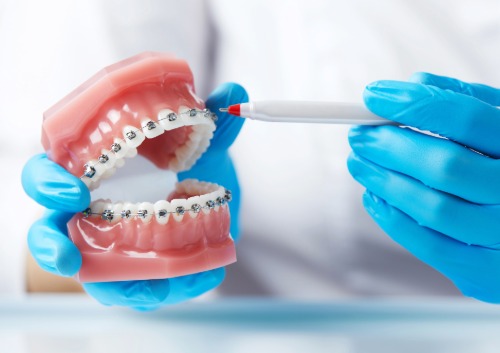
People often ask us, “How do braces work?” It’s simple: braces work by putting gentle, steady pressure on your teeth. Over time, that pressure moves each tooth into a better spot. It may seem like magic, but it’s smart science!
If you’re a parent getting braces for your child or an adult seeking a straighter smile, this guide will explain how braces work in simple terms. You’ll learn about the types of braces, the process, and the typical treatment duration.
What Are Dental Braces?
Braces are small tools that an orthodontist attaches to your teeth to straighten them. They can fix crooked teeth, gaps, and crowding. They can also fix bite problems, like an overbite, where the top and bottom teeth don’t meet the right way.
People have tried to straighten teeth for thousands of years. Today’s braces are much smaller, more comfortable, and more exact than ever. They can be made of metal, tooth-colored ceramic, or clear plastic.
How Do Braces Work?
It may feel like the position of your teeth is permanent, but our teeth are not glued in place. Each tooth sits in your jawbone and is held by a soft, stretchy tissue called a ligament. This structure is the secret behind how braces work.
How Braces Straighten Your Teeth
When braces push on a tooth, they squeeze the ligament on one side and stretch it on the other. Your body responds in two ways:
- On the side being squeezed, special cells slowly break down a tiny bit of bone. This makes room for the tooth to move.
- On the side being stretched, other cells build new bone. This fills in the space the tooth left behind.
Orthodontists call this process bone remodeling. It is what makes braces possible. This process is slow and steady. It happens a little at a time, over many months.
The Role of Brackets and Wires
Traditional braces have three main parts:
- Brackets are small squares glued to the front of each tooth. They act like handles.
- The archwire is a thin wire that runs through all the brackets. It’s shaped like the smile you want, then attached to your existing smile. As it tries to return to it’s original shape, it pulls your teeth along with it.
- Bands or elastics hold the wire in place. Some patients also wear rubber bands that connect the top and bottom teeth to help fix their bite.
Metal braces are the classic choice and work well for most orthodontic problems. Ceramic braces work the same way, but their clear or tooth-colored brackets are harder to see.
Why Adjustments Matter
Every few weeks, you will visit your orthodontist for a check-up. They may swap in a new wire, tighten things up, or change your rubber bands. Each adjustment adds the right amount of new pressure. This keeps your teeth moving in the right direction.
How Clear Aligners Compare to Braces
Clear aligners like Invisalign use the same basic science. Instead of brackets and wires, you wear a series of clear plastic trays. Each tray is slightly different from the last one. You switch to a new tray every week or two, and your teeth shift a little more each time.
Benefits of Getting Braces
A straight smile looks great, but the benefits go much deeper.
- Better dental health. Crooked or crowded teeth are hard to clean. Food and plaque hide in tight spots, which can lead to cavities and gum disease. Straight teeth are easier to brush and floss.
- A healthier bite. When your teeth meet the right way, you can chew more easily. You also put less wear and tear on your teeth and jaw.
- More confidence. Many people feel happier about smiling, talking, and taking photos after treatment.
- Long-term results. With good care and a retainer, your new smile can last for life.
The Braces Process: What to Expect
Step 1: Your First Consultation
Your journey starts with a free consultation at one of our offices in Buffalo, Getzville, or Springville. We take photos, x-rays, and a 3D scan of your teeth. Then Dr. Patel will talk with you about your goals and answer your questions.
Step 2: Getting Your Braces Put On
Putting on braces does not hurt. First, we clean and dry your teeth. Next, we attach a bracket to each tooth with safe dental glue. Then we thread the wire through the brackets and hold it in place. The whole visit usually takes about one to two hours.
Step 3: Regular Check-Ups and Adjustments
You will come back about every 6 to 8 weeks. At each visit, we check your progress and make small changes to keep things on track. These visits are usually quick.
Step 4: Braces Off and Retainer On
When your teeth are in place, we take your braces off. Then you get a retainer to keep your teeth from shifting back. Not sure which kind is best? Read our guide on which retainer is right for you.
Common Questions on How Braces Work
Do braces always work?
Braces work for almost everyone, at almost any age. The key is following your orthodontist’s advice. Wear your rubber bands, keep your appointments, and avoid hard or sticky foods that can break brackets.
Do braces hurt?
Getting braces put on does not hurt. Your teeth may feel sore for a few days after they go on and after some adjustments. Soft foods and over-the-counter pain relievers usually help.
How long does braces treatment take?
Most treatments take 12 to 24 months. Your exact timeline depends on your teeth and your goals.
What types of braces does LakeStone offer?
We offer a variety of braces types to meet your orthodontic & lifestyle needs:
- Metal braces using traditional brackets & wires
- Ceramic braces that use clear technology for a more discreet appearance
- Invisalign clear aligners that are removable for meals and nearly invisible
- InBrace lingual braces that stay hidden behind your teeth.
At what age should someone consider braces?
For young kids, early treatment can guide jaw growth and make later care simpler. And it’s never too late: we offer adult orthodontics too.
Ready to See How Braces Can Work for You?
Braces use gentle pressure and your body’s natural ability to rebuild bone to move teeth into a healthier, straighter position.
The best way to know which option fits you or your child is to talk with an expert. Book your free consultation with LakeStone Orthodontics in Western New York today!